

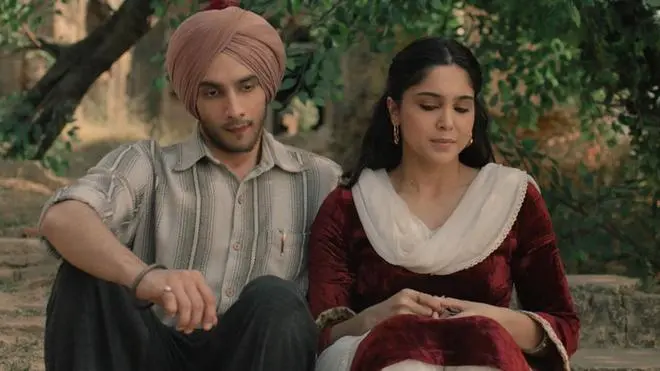




Director Imtiaz Ali returns to the silver screen with a deeply moving romantic drama that explores the profound human cost of history. His latest cinematic offering explores the lingering trauma of Partition through the fragile lens of fading memory. Rather than relying on massive scale or loud melodrama, the film achieves its brilliance through quiet emotional intimacy. It serves as a reminder of how cinema can beautifully capture the essence of longing.
The Heart of the Story
The narrative of Main Waapas Aaunga revolves around Ishar Singh Grewal, a ninety five year old patriarch wrestling with dementia. While his body rests in present day India, his mind resides in the pre Partition era of Sargodha. His sons dismiss his erratic behavior as mere cognitive decline, but his grandson Nirvair recognizes a deeper call for closure.
The story moves fluidly between two timelines. The present day tracks the efforts to decode the mind of an old man, while the past recreates his youth. As a young student affectionately called Keenu, he falls in love with Jiya. When the sudden violence of Partition tears their world apart, Keenu leaves her behind with a desperate promise that gives the film its title.
Standout Performances That Anchor the Film
The undisputed soul of this movie is Naseeruddin Shah. Delivering one of the finest performances of his legendary career, he portrays the elderly Ishar with staggering realism. He captures both the absolute confusion of a fading mind and the sharp intensity of a love that never decayed. A simple gesture like tidying his beard at the sight of an old portrait evokes pure heartbreak.
Vedang Raina is equally exceptional as the younger version of the protagonist. He brings a starry eyed innocence to Keenu that makes his impending tragedy incredibly painful to watch. Sharvari delivers a luminous performance as Jiya, balancing radiant energy with a quiet maturity. The chemistry between the younger pair feels organic and gives the audience a real reason to invest in their romance.
Diljit Dosanjh plays the role of the devoted grandson Nirvair. While his natural charm makes his screen presence likeable, his modern relationship subplot with Banita Sandhu feels slightly weak. The contemporary romance lacks the depth of the central historical narrative and occasionally slows the pacing down.
Masterful Direction and Music
Imtiaz Ali proves once again that he is a master of human emotions. He cleverly shifts focus away from standard political angles to highlight the psychological trauma carried by an entire generation. His visual storytelling is elevated by cinematographer Sylvester Fonseca, who handles the contrast between the vibrant past and the sterile present beautifully.
The background score and music by AR Rahman act as a separate character in the journey. The iconic director and composer duo strike gold yet again, ensuring the music deepens the emotional resonance of key scenes. The tracks are woven perfectly into the narrative, building up to a beautiful post credits song that forces the audience to sit still in contemplation.
Technical Execution and Flaws
At a runtime of two hours and forty six minutes, the film does suffer from pacing issues in the middle section. The screenplay feels somewhat predictable because audiences are already familiar with the historical backdrop of Partition. A few scenes involving family drama in the modern timeline feel repetitive and could have been trimmed to maintain a tighter grip. However, the exceptional final half hour more than compensates for these minor script issues.
Final Verdict
Main Waapas Aaunga is not a conventional movie about historical borders. It is a brilliant exploration of love, guilt, and the stubborn nature of memory. Despite a few pacing bumps, the film achieves massive emotional heights that few modern filmmakers can reach. It leaves you with moist eyes and a lingering ache that stays with you long after the theater lights turn back on.
Rating: 4 out of 5 stars
Leave a Reply