

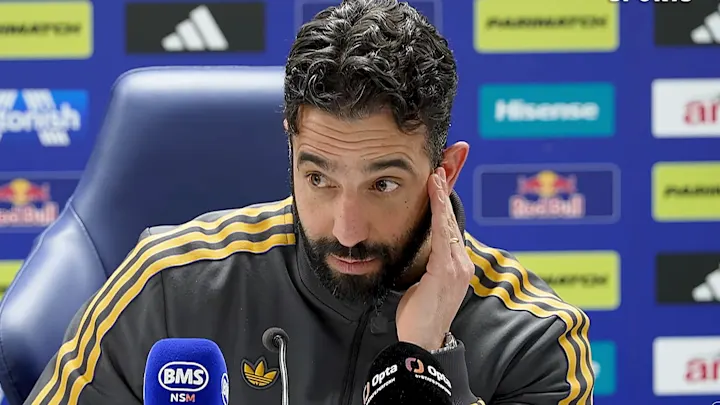




Manchester United finds itself at another crossroad after officially letting go of Ruben Amorim. Hired this past November 2024 with a reputation as one of the most brilliant tactical minds in Europe, the Portuguese manager lasted just fourteen months before the plug was pulled on his tenure. That move came in pretty quick succession after Sunday’s tense one-one draw against Leeds United, which left United stuck in sixth place and again pondering what precisely their definite identity should be.
The sacking is another turbulent chapter in the record of a club that has hardly found stability since the departure of Sir Alex Ferguson. The fanfare which accompanied his appointment and a journey, albeit aplenty forgettable, to the Europa League final in Bilbao last May, the Amorim project finally collapsed under tactical inflexibility and a very public breakdown in relations with the hierarchy of the club.
A Tactical Vision That Failed to Ignite
Yet, at the root of most of their struggles was Amorim’s stubborn insistence on his trademark 3-4-3 formation. A system that worked so well for him at Sporting Lisbon often appeared ill-suited for the intensity of the Premier League. Many observers felt this squad lacked specific profiles needed to make the wingback system shine and therefore caused disconnection between the back and the attacking line.
The board reportedly grew concerned that Amorim was unwilling to adapt his tactical philosophy to suit the players at his disposal. That stubbornness came to a head when he started to make a spate of unorthodox selections, such as playing Kobbie Mainoo as a makeshift striker. Such experiments often backfired, leading to inconsistent results and a lack of progress on the pitch. Even after a significant summer spend of over one hundred and sixty million pounds on talents like Benjamin Sesko and Matheus Cunha, the team failed to find a cohesive rhythm.
Power Struggles and the Debate between the Manager and the Coach
But beyond the tactical issues, a big chasm opened up behind the scenes. The Manchester United hierarchy, shaped by chief executive Omar Berrada and director of football Jason Wilcox, had moved the responsibilities of the leader to that of a head coach. However, Amorim bucked against that from the very start, making it clear he saw himself as a manager with total responsibility on footballing matters, from recruitment to scouting.
Following the draw at Leeds, Amorim launched into a pointed press conference rant where he declared himself as manager, not just a coach. He publicly challenged the recruitment department to do their job and insinuated the club was getting too sensitive to outside criticisms from pundits like Gary Neville. This public defiance of the new leadership structure under INEOS made his position untenable, given it was crystal clear there was a fundamental lack of alignment in terms of the future direction of the club.
Darren Fletcher Steps into the Breach
Following the sacking, Manchester United have confirmed that Darren Fletcher will be put in charge as interim manager. A former United midfielder who understands the culture and DNA of the club, Fletcher has been serving as a coach within the setup and was recently the Under eighteen manager. His immediate task is to stabilize a dressing room that has been rocked by constant change.
That means Fletcher will front the team for their next fixture against Burnley and offers a point of continuity for the players. Some reports have stated the club may keep him in charge through to the end of the season to avoid a rushed appointment, but already, the search for a permanent successor is well underway.
Looking Ahead: The Candidates for the Hot Seat
The United board is now looking for a leader who can work within their structured sporting model while delivering a modern winning style of football. A number of high-profile names have already emerged as potential candidates to lead the next era at Old Trafford:
Enzo Maresca: The Italian ex-Chelsea and Leicester City chief was one of the early favourites for the job. His tactical acumen is held in high regard from working with Pep Guardiola, and he is now out of work after leaving his last post.
Oliver Glasner: He, the manager of Crystal Palace, has seen his stock rise following his success in the Premier League. Having experience in his repertoire with high pressing systems, he could be one of the top targets.
Xavi: The ex-Barcelona player has been rumored to take the job since he left the Catalan giants. His stature and adherence to possession football fit Manchester United.
Gareth Southgate: The former England manager remains a name much talked about by the United hierarchy, not least because of his ability to handle big personalities and cope with high-pressure environments.
Final Thoughts
The sacking of Ruben Amorim is a stark reminder of the huge pressures that come hand in hand with the job at Manchester United. An arrival promising a tactical revolution quickly grew into a season epitomized by friction and underperformance. In the temporary charge of Darren Fletcher, the fans are once again hopeful that the next appointment is the one that would finally restore their club to its former heights.
Leave a Reply