

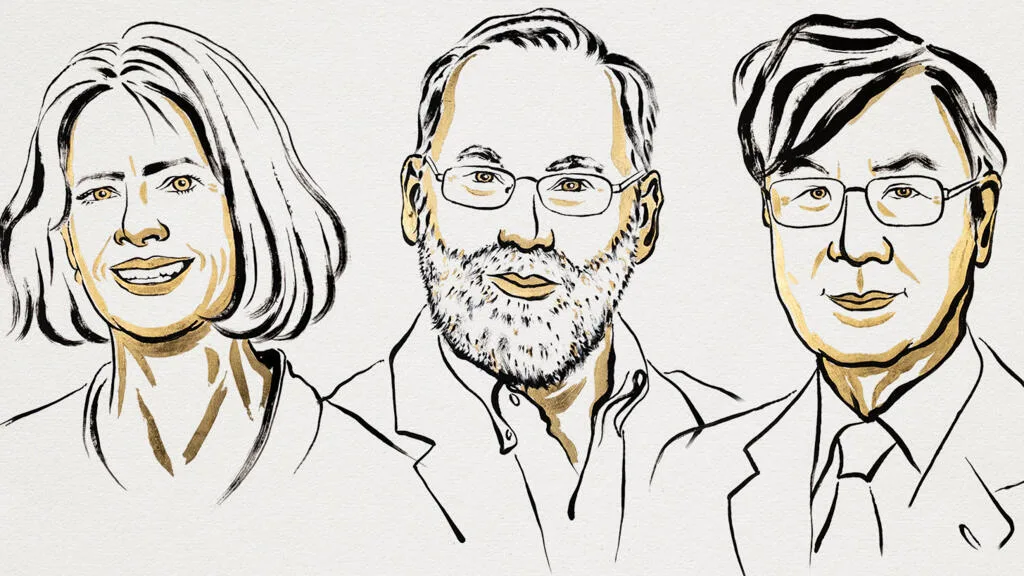




Mary E Brunkow, Fred Ramsdell, and Shimon Sakaguchi have won the Nobel Prize in Physiology or Medicine in 2025 for their pioneering research on peripheral immune tolerance. Their research uncovered how the body keeps its immune system from attacking healthy cells—a discovery that paves the way for new possibilities in treating autoimmune diseases and cancer.
What Is Peripheral Immune Tolerance and Why It Matters
Peripheral immune tolerance refers to the body’s capacity to modulate its immune system so that it attacks harmful intruders such as viruses and bacteria but leaves its own tissues alone. The research from the trio revealed the function of regulatory T cells, a minor but significant group of white blood cells that work as internal peacemakers. These cells stop the immune system from tipping into self-destruction, the underlying cause of autoimmune diseases like Type 1 diabetes, lupus, and rheumatoid arthritis.
The Discovery of FOXP3 and Its Immune Control Function
Brunkow and Ramsdell discovered their finding in the process of observing mice with profound autoimmune manifestations. They described a gene named FOXP3, which was a master switch for regulatory T cells. The mutations of this gene were known to result in IPEX syndrome, a rare but fatal autoimmune disease in humans. Sakaguchi had already established the presence of regulatory T cells from earlier work, and the FOXP3 discovery established their genetic and functional basis.
Clinical Significance and Future Prospects
The scope of the implications of this finding is enormous. Over 200 clinical trials are in process to investigate therapies utilizing regulatory T cells. They include autoimmune disease treatments, cancer immunotherapy, and tolerance to organ transplants. Interleukin-2, a molecule that feeds T cells, is used in some trials, while others deploy engineered T cells to inhibit immune rejection.
Who Are the 2025 Nobel Laureates in Medicine
Mary E Brunkow: Senior program manager at Seattle’s Institute for Systems Biology
Fred Ramsdell: Scientific adviser at San Francisco’s Sonoma Biotherapeutics
Shimon Sakaguchi: Professor at Osaka University and the discoverer of immunology
Together, their work has transformed scientists’ comprehension of immune regulation and established the basis for a new generation of precision medicine.
A Moment of Surprise and Celebration
Notably, Ramsdell was unavailable to be reached at the time of announcement, having apparently gone on a digital detox trek into the US wilderness. Brunkow was alerted when her dog chased a news photographer off her front porch. Sakaguchi was greeted by a congratulatory phone call from Japan’s Prime Minister while holding his press conference, in which he hoped that cancer would eventually become an entirely curable disease.
Leave a Reply