

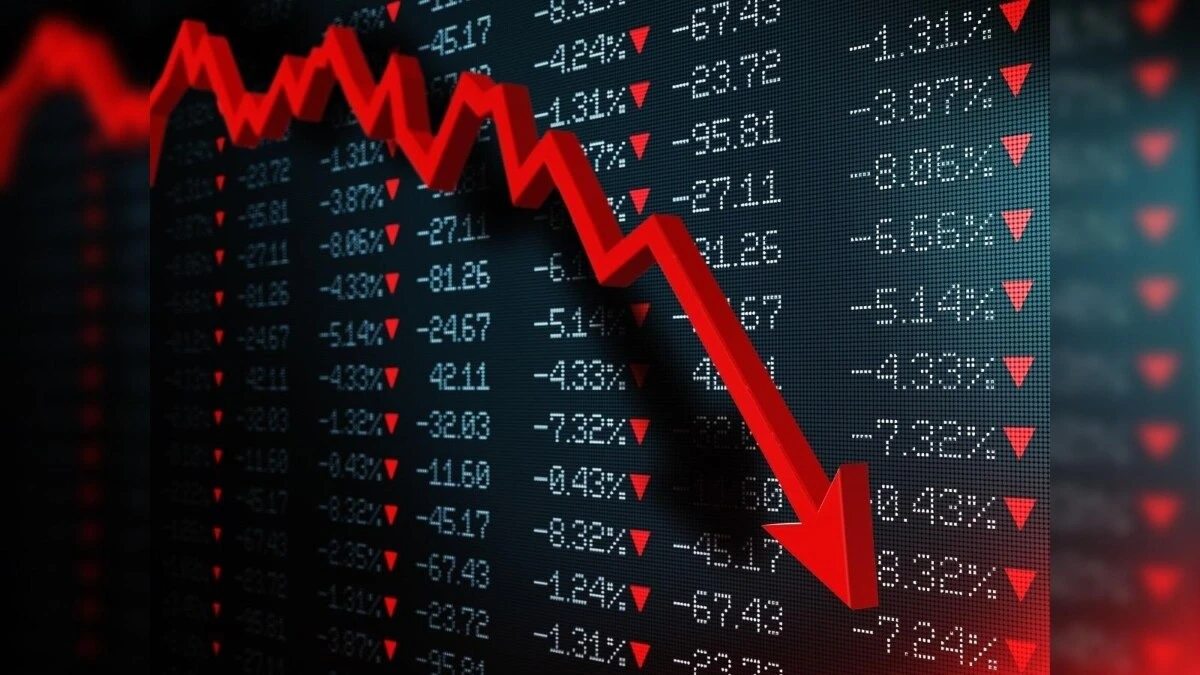




The Indian stock market today, Monday, December 8, 2025, saw a significant decline with benchmark indices Sensex and Nifty recording steep losses. After the recent rate cut by the Reserve Bank of India, when optimism in the market was seen, it quickly retreated as investors turned cautious. A combination of domestic and global factors contributed to this sharp correction in the market, bound by the interdependence of world financial markets.
Global Jitters Ahead of US Federal Reserve Decision
The single largest factor influencing today’s negative sentiment is the upcoming meeting of the US Federal Reserve-also known as The Fed-later this week.
Pre Fed Caution
The FOMC interest rate decision scheduled on December 10 remains in the investor’s ‘to-watch’ list. While market expectations are largely tilted for a 25 basis points rate reduction, traders are de-risking their portfolios to hedge against any unexpected hawkish signals or a surprise move to maintain the status quo. An unexpected non-cut by the Fed could strengthen the US dollar, which puts immediate pressure on emerging markets like India.
The Yen Carry Trade Fear
The surge in Japanese government bond yields added further unease to the troubled global sentiment. Higher JGB yields also have increased the fear of a potential unwinding of the yen carry trade. Investors borrow at low Japanese interest rates to invest in higher-yielding assets around the globe, including Indian equities. A reversal of this trend could trigger a substantial outflow of foreign capital from India, leading to market volatility.
Foreign Institutional Investor (FII) Outflows and Rupee Weakness
The incessant foreign institutional capital outflow continued to pose a hurdle for the Indian markets and grew stronger today.
Sustained FII Selling
Foreign institutional investors have been net sellers in the domestic equity market. In the month of December alone, there has been a steady withdrawal of foreign funds. This continuous selling pressure has acted as a significant drag on the market, creating a negative feedback loop where selling begets more selling, particularly in the midcap and smallcap segments. Domestic Institutional Investors have tried to provide support but the FII selling momentum is strong.
Rupee Depreciation
Adding to the worry of FII selling is the weakness in the Indian Rupee, which is at a nearly all-time low against the US dollar. A depreciating rupee automatically eats away the returns for foreign investors when they convert their profits back into their home currency. This loss in value directly encourages FIIs to sell their equity holdings and, therefore, exacerbates the overall market fall. Rising crude oil prices also add pressure on the rupee and fuel domestic inflation concerns.
Sectoral and Broader Market Underperformance
The selloff today was broad-based as nearly all sectoral indices closed the day in the red.
Broader Market Correction
The selling pressure was mostly concentrated in the midcap and smallcap segments, which witnessed significant underperformance against the frontline indices. Indeed, the Nifty MidCap 100 and Nifty SmallCap 100 indices suffered sharper cuts as investors booked profits from what is generally considered the riskier part of the market. This reflects heightened risk aversion among traders.
Realty and PSU Bank Pain
The Nifty Realty index was the biggest sectoral loser, which corrected sharply after its recent runaway gains. Profit booking in real estate stocks, despite the recent RBI rate cut, indicates that a big portion of positive news might already be priced in. Also, the Nifty PSU Bank index witnessed heavy selling. Overall, the market breadth was highly negative, confirming the selling across Dalal Street.
Outlook: Volatility Expected to Continue
While the domestic economic fundamentals remain strong, with robust GDP growth and improving corporate earnings, these global and financial factors are weighing heavily on short-term sentiment. A spike in the India VIX indicates increased uncertainty. Investors should brace for high volatility over the next few days, while the market’s direction will largely depend on the outcome of the US Federal Reserve’s policy announcement. Disclaimer: This blog is for information only and does not constitute investment advice. Always consult with a registered financial advisor before making investment decisions.
Leave a Reply