

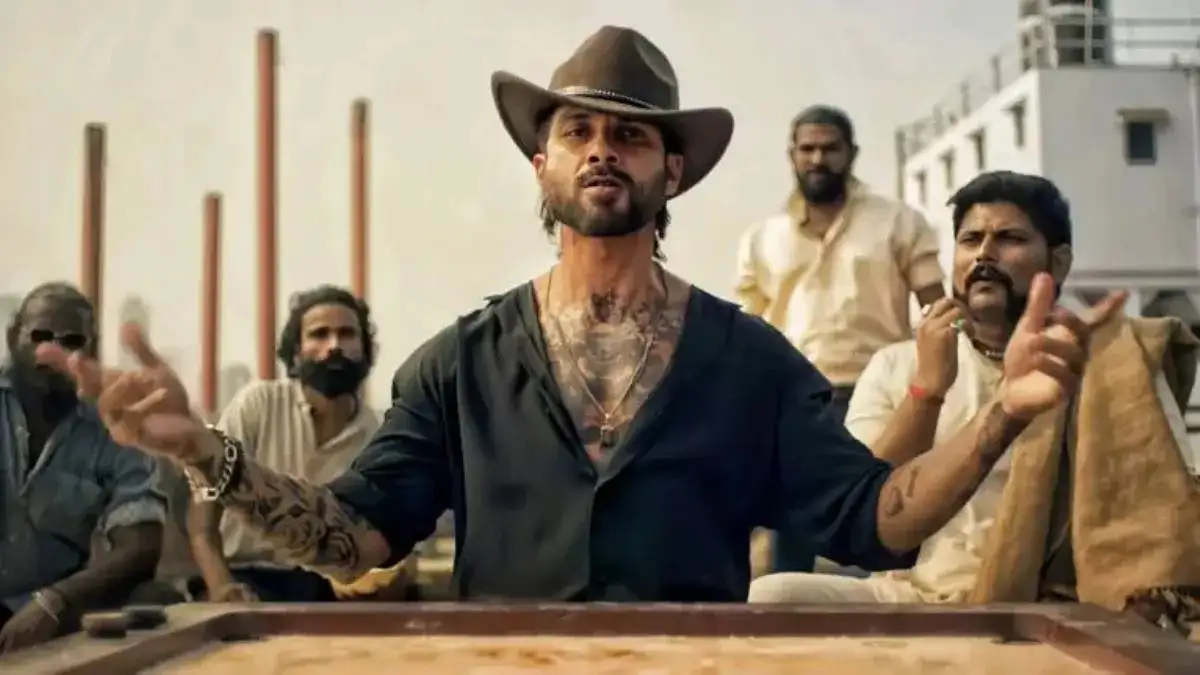




The cinematic reunion of Shahid Kapoor and director Vishal Bhardwaj is always a cause for celebration among cinephiles. After the cult success of Kaminey and the haunting depth of Haider, the duo returns in 2026 with O’Romeo, a sprawling underworld saga set against the backdrop of 1990s Mumbai. Released just in time for Valentine’s Day, the film offers a darker, more violent take on romance than its title might suggest.
The Plot: A Tale of Ustara and Afshan
The story is inspired by real life accounts from Hussain Zaidi’s Mafia Queens of Mumbai. Shahid Kapoor plays Hussain Ustara, a feared contract killer whose signature weapon is the barber’s razor from which he takes his name. His life of cold calculations takes a sharp turn when he meets Afshan, played by Triptii Dimri, a woman seeking a bloody kind of justice.
Unlike the Shakespearean tragedy, this Romeo is a product of the Mumbai seafront, a man who navigates gang wars and betrayal while falling for a woman whose own path is littered with wreckage. The narrative moves from the rustic, metallic grime of Mumbai shipwrecks to the sun drenched bullrings of Spain, following a trail of revenge that feels both intimate and epic.
Performances: Shahid Kapoor’s Ferocious Transformation
Shahid Kapoor continues to prove why he is Bhardwaj’s favorite muse. As Ustara, he sports a rugged, tattooed look that reflects his character’s inner turmoil and “child like obstinacy.” He balances a swaggering body language with moments of genuine vulnerability, making a largely unlikable man someone the audience can still root for.
Triptii Dimri is equally compelling as Afshan. She moves away from the “love interest” trope to deliver a performance that is both fierce and resolute. The supporting cast is a powerhouse of talent, featuring Nana Patekar as a quirky Intelligence Bureau officer and Avinash Tiwary as the menacing antagonist Jalal. While Disha Patani and Tamannaah Bhatia have smaller roles, they add to the film’s vibrant, stylized world.
Direction and Cinematography: The Bhardwaj Aesthetic
Vishal Bhardwaj remains a master of blending high art with mass appeal. The film is “Tarantinoesque” in its execution, featuring gratuitous violence that is often choreographed to a poetic beat. The cinematography by Ben Bernhard is a standout, using earthy, rustic tones and a color palette of metal and rust to define the 1990s era.
Every frame feels intentional, capturing the “Ganga Jamuna” moment Shahid Kapoor mentioned in interviews, where the film bridges the gap between intellectual cinema and a commercial entertainer. However, with a runtime of nearly three hours, the pacing occasionally falters, and the screenplay can feel scattered as it tries to juggle multiple character arcs.
Music and Sound: The Soul of the Film
No Bhardwaj film is complete without a stellar soundtrack, and O’Romeo delivers. With lyrics by the legendary Gulzar, the music serves as the emotional heartbeat of the story. Tracks like “Hum To Tere Hi Liye The” and the energetic “Paan Ki Dukaan” provide a necessary contrast to the onscreen carnage. The background score further enhances the tension, grounding the stylized action in a sense of operatic weight.
Final Verdict: Is O’Romeo a Masterpiece?
O’Romeo is a bold, bloody, and beautiful film that serves as a testament to the power of original storytelling. It is not for the faint of heart, as the violence is visceral and the themes are dark. However, for those who appreciate character driven dramas with a touch of poetic grit, it is a must watch. While it may not reach the heights of Haider, it certainly stands as one of the most ambitious Indian films of 2026.
Our Rating: 3.5 out of 5 stars
Leave a Reply