

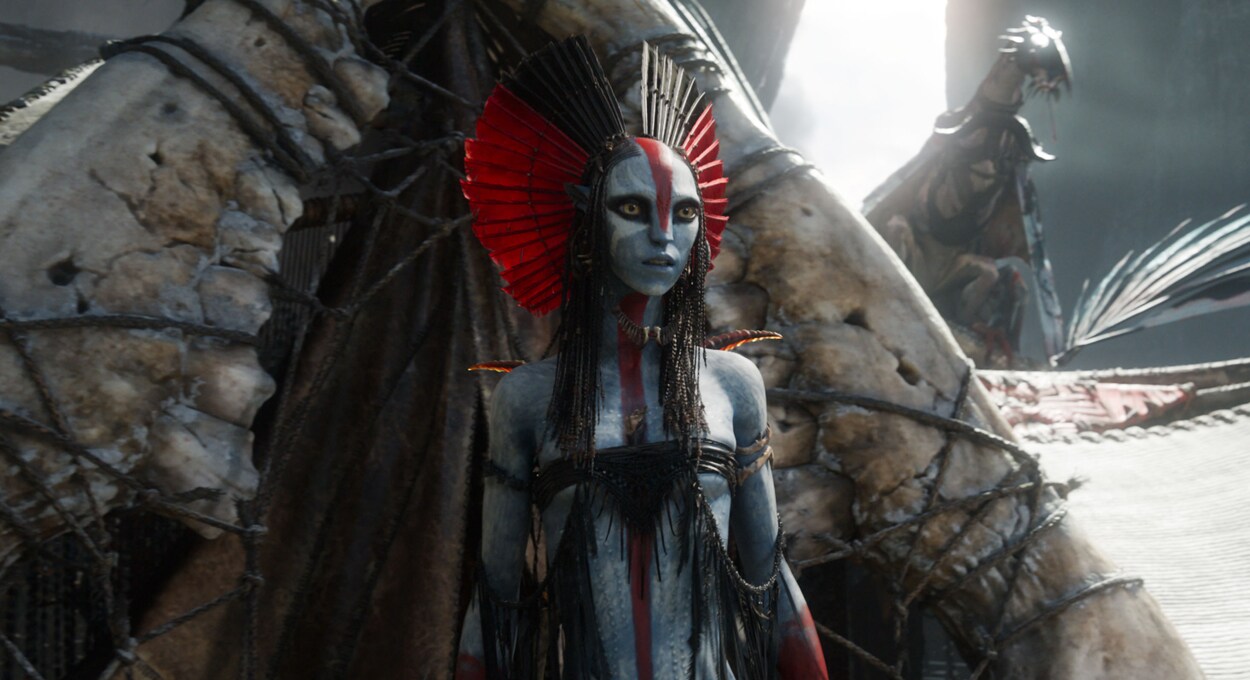




The Pandora series has long held us under its spell. With the likes of director James Cameron at the helm, the series has consistently broken barriers and defied the boundaries of cinematic technology. The next addition, Avatar: Fire and Ash, is set to show us even more of the moon and its varied biomes while also bringing us the darker aspect of the Na’vi. After all the waiting, the time has finally come to examine whether this third part meets the monumental challenge left by the previous ones.
Uncovering the Ash People of Pandora
One of the most interesting features in the movie is the emergence of the Ash People. In the past, the Na’vi have always been known to be honorable protectors of Mother Nature. However, Cameron turns the table in the movie for the Ash People to emerge as fire and the destruction caused by volcanoes.
There is definitely a thematic shift here. While the previous two installments dealt with the beauty of the forest and the wonder of the oceans, Fire and Ash is all about anger, sorrow, and the destructive aspect of culture. Witnessing the Na’vi live among the barren and burnt landscape is quite a relieving change from the neon blues and greens we have become familiar with.
Visual Effects that Boggle the Mind
There is no doubt about the fact that the visual effects are truly spectacular. The team at Weta FX continues to push the boundaries when it comes to motion capture and environmental effects. The movement of the embers in the air and the effect of the lava glow shining through the characters’ pores looks impressively alive.
The cinematography takes full advantage of the high frame rates and the deep 3D immersion in order to make the audience feel the heat from the volcano plains. Trust me when I tell you that if you’re watching this on an ordinary screen, you’re getting half the experience. This film was made for IMAX screens, and every frame shows that Cameron is the undisputed master of the technical aspect of filmmaking.
Character Development & Emotional Stakes
It also continues with Jake Sully and Neytiri and the challenges that come with having children and being a leader. Inner torments with regards to identity and a sense of belonging are also prominent.
The arrival of Varang, leader of the Ash People, brings an element of conflict that was lacking in preceding movies. Rather than an easily definable fight between humans and Na’vi, what is presented here is conflict among their own ranks by the native population of Pandora. This layer of complexity gives it all a more personal feel instead of being so commonplace in blockbuster movies.
Pacing and Narrative Length
If a critique is to be leveled, it is on account of its runtime. Just like its forebears, Avatar: Fire and Ash, is one long ride. The second act sometimes meanders a little too much into world-building, a process that could try a fan wanting to see action, action, and nothing but action.
However, those who are fans of Pandora’s lore are treated to moments like these. There are opportunities to become invested in this world in a much deeper fashion. While they take their time building this story, they end up with something truly explosive in those final minutes.
How It Compares to The Way of Water
There were quite a few fans who wondered if this third installment could live up to the emotional impact of the ocean scenes in *The Way of Water*. The Way of Water was like an exploration, but *Fire and Ash* has a sense of struggle for survival about it. There’s less exploration, and it’s about the effects of war and climate change.
The transition from water to fire is an ideal example of the tone shift in the series. It is darker, more complex, and definitely more aggressive. It resolutely sidesteps the typical second installment dip in quality and does this in a successful manner by injecting sufficient newness into the formula.
Is It Worth the Watch?
Avatar: Fire and Ash is a must-see movie experience in itself. Even if it is a predictable storyline when it comes to conflict and resolution, it is certainly a spectacular piece of work in terms of its massive output in production. Getting a visionary director their budget to execute their dream projects is evident in this movie. It succeeds in expanding on Pandora lore while questioning our understanding of the Na’vi. It is a feast for the eyes and requires being projected on as big a screen as possible. Whether one is a fan or simply an observer, one cannot deny the artistry on display.
Leave a Reply